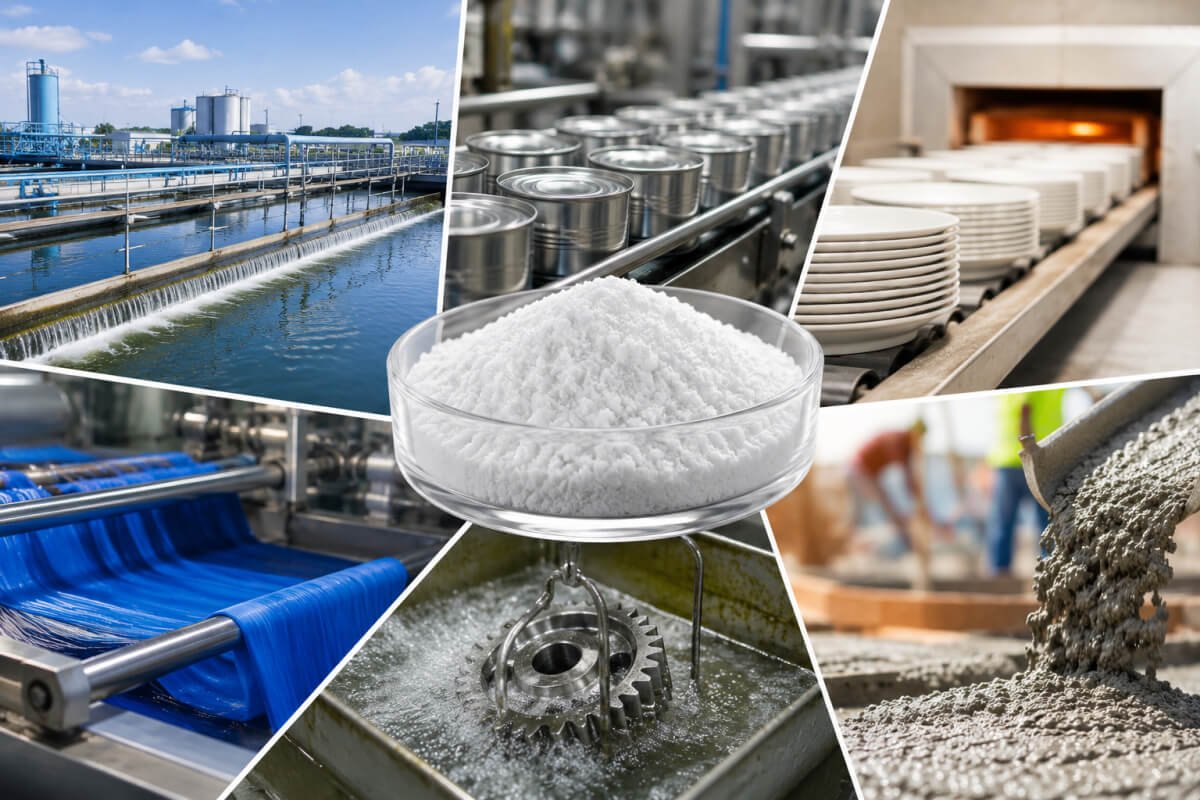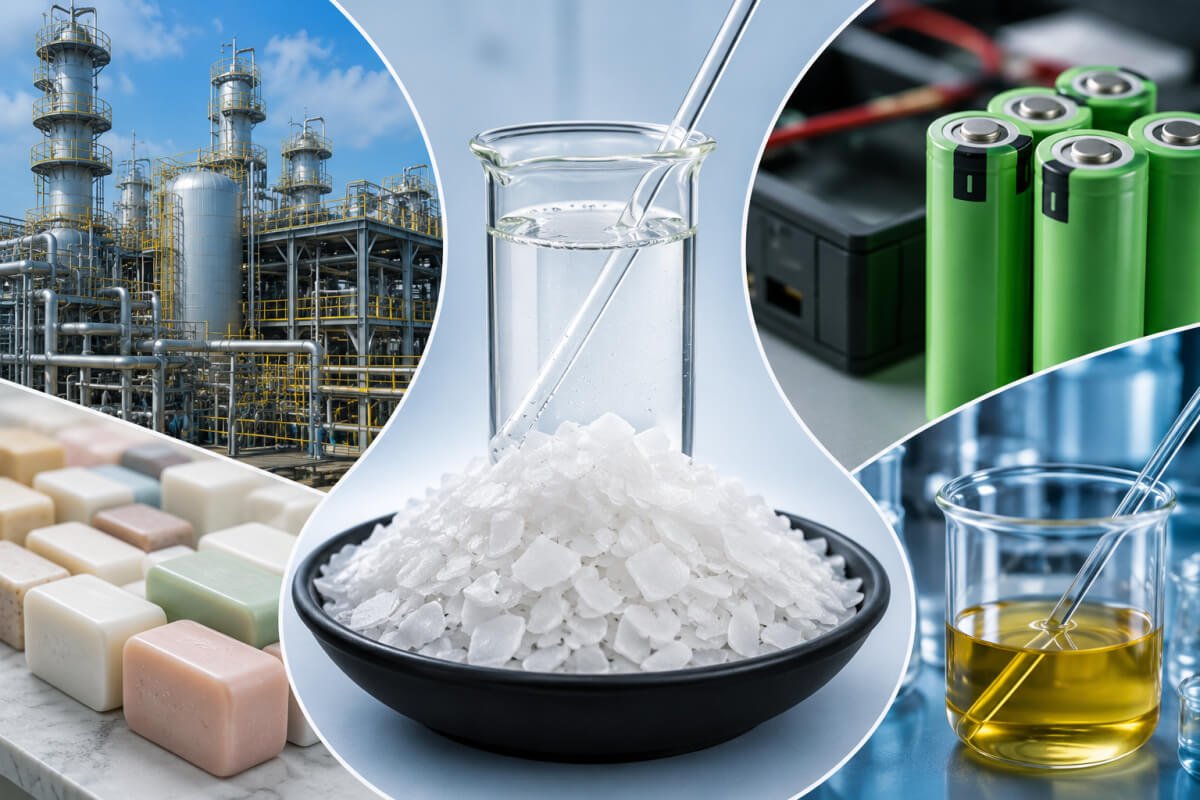
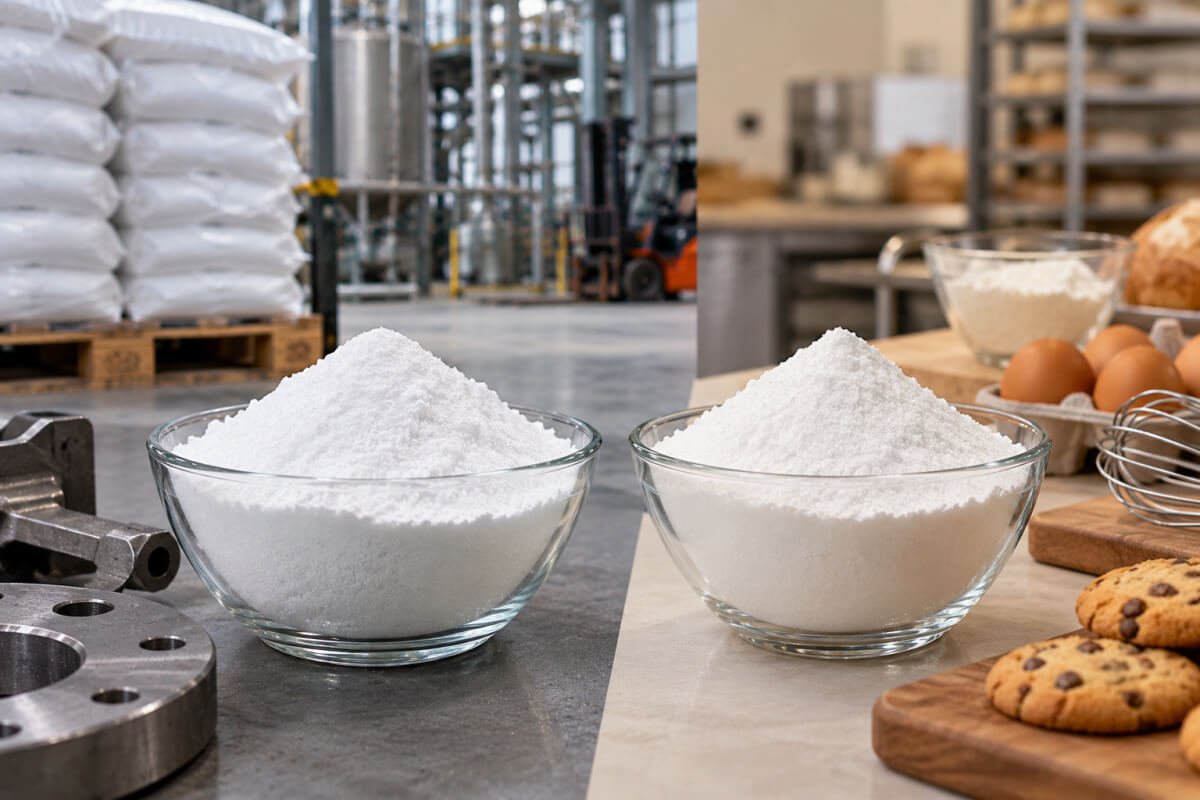
Sodium bicarbonate is one of the most widely used chemical compounds in the world. Known commonly as baking soda, this white crystalline powder with the chemical formula NaHCO₃ appears in applications ranging from food production and pharmaceuticals to water treatment, industrial cleaning, and chemical manufacturing. But not all sodium bicarbonate is created equal. The grade of the product — specifically whether it is industrial grade sodium bicarbonate or food grade sodium bicarbonate — determines where it can be used, how pure it needs to be, and what quality certifications it must carry.
For manufacturers, formulators, and procurement teams looking to buy sodium bicarbonate in bulk, understanding the difference between sodium bicarbonate food grade vs industrial grade is essential to avoid compliance risks, quality failures, and unnecessary costs. This guide breaks down the key distinctions, explains where each grade is used, and outlines what to look for when selecting a sodium bicarbonate supplier India can depend on for consistent, certified quality.
What Is Sodium Bicarbonate?
Sodium bicarbonate (NaHCO₃) is a mildly alkaline inorganic salt with a molecular weight of 84.01 g/mol and a pH of 8.3 to 8.6 in solution. It is produced commercially by reacting sodium carbonate (soda ash) with carbon dioxide and water under controlled conditions. The result is a fine, white, odourless crystalline powder that is highly soluble in water and stable under normal storage conditions.
What makes sodium bicarbonate exceptionally versatile is its mild alkalinity, buffering capacity, effervescent reaction with acids, and non-toxic composition. These properties allow it to serve functions as diverse as leavening in baked goods, pH adjustment in water treatment, abrasive cleaning in industrial maintenance, and acid neutralisation in chemical processing.
As a trusted sodium bicarbonate manufacturer in India, Sri Varahi Chemicals supplies both industrial and food grade sodium bicarbonate with verified purity, consistent quality, and bulk packaging suited for large-scale operations.
The Core Difference: Purity and Regulatory Compliance
The fundamental distinction between food grade and industrial grade sodium bicarbonate lies in purity levels and regulatory certification — not in the base chemistry. Both grades share the same molecular formula and the same core chemical properties. The difference is in how tightly impurities are controlled and whether the product meets the safety standards required for human consumption.
Food Grade Sodium Bicarbonate must meet the purity and safety standards defined by food regulatory bodies such as the Food Safety and Standards Authority of India (FSSAI), the United States Food and Drug Administration (FDA), or the European Food Safety Authority (EFSA). These standards mandate a minimum purity of 99.0% to 99.7%, with strictly controlled limits on heavy metals (lead, arsenic, mercury), iron content, chloride levels, and insoluble matter. The manufacturing facility must follow Good Manufacturing Practices (GMP), and the product must be traceable from raw material to final packaging.
Industrial Grade Sodium Bicarbonate is manufactured to a purity standard of approximately 98% to 99%. While still a high-quality product, it is not required to meet food safety regulations. Impurity limits for heavy metals and contaminants are less stringent, and the manufacturing environment does not need to comply with food-grade hygiene and traceability requirements. This grade is designed for applications where the product will not come into direct contact with food or pharmaceuticals.
Using industrial grade material in food or pharmaceutical applications is a compliance violation that can result in regulatory penalties, product recalls, and serious reputational damage. Conversely, using food grade material in industrial applications is technically safe but economically wasteful — food grade commands a higher price due to its tighter specifications and certification costs.
Where Industrial Grade Sodium Bicarbonate Is Used
Sodium bicarbonate industrial uses span a wide range of sectors where its mild alkalinity, buffering capacity, and non-toxic profile deliver practical value.
Water and Effluent Treatment: Industrial grade sodium bicarbonate is used as a pH adjustment agent in municipal water treatment and industrial effluent processing. It neutralises acidic wastewater, controls alkalinity in treatment processes, and serves as a safer alternative to stronger alkalis like caustic soda. Its buffering capacity prevents pH overshooting, making it easier to maintain discharge compliance. For a broader look at how alkaline chemicals perform in water treatment, it is worth reading about how soda ash dense is used in water treatment and effluent processing, where similar pH correction and neutralisation principles are applied at larger scale.
Flue Gas Treatment: One of the largest industrial applications of sodium bicarbonate is in dry sorbent injection (DSI) systems for flue gas desulphurisation. Power plants, cement kilns, and waste incinerators inject finely milled sodium bicarbonate into exhaust gas streams to neutralise sulphur dioxide (SO₂), hydrochloric acid (HCl), and other acidic pollutants before they are released into the atmosphere.
Industrial Cleaning and Surface Preparation: Sodium bicarbonate is used as a mild abrasive in soda blasting — a surface cleaning technique that removes paint, coatings, grease, and carbon deposits from metal, concrete, and masonry surfaces without damaging the substrate. It is also used in cleaning formulations for food processing equipment, commercial kitchens, and industrial machinery.
Fire Suppression: Sodium bicarbonate is a key ingredient in dry chemical fire extinguishers designed for Class B (flammable liquid) and Class C (electrical) fires. When discharged, the powder decomposes in the heat to release carbon dioxide, which smothers the fire.
Animal Feed: Industrial grade sodium bicarbonate is added to livestock feed — particularly for dairy cattle and poultry — as a dietary buffer. It helps maintain rumen pH in dairy cows, improving feed digestion, milk yield, and overall animal health.
Chemical Manufacturing: It serves as a raw material and pH regulator in the manufacture of other chemicals, dyes, pigments, and pharmaceutical intermediates.
Where Food Grade Sodium Bicarbonate Is Used
Food grade sodium bicarbonate is reserved for applications where the product comes into direct contact with food, beverages, or pharmaceutical preparations intended for human consumption.
Baking and Food Production: This is the most recognised application. Sodium bicarbonate acts as a leavening agent in baked goods — breads, cakes, biscuits, and pastries. When it reacts with an acid (such as buttermilk, vinegar, or cream of tartar), it releases carbon dioxide gas, which causes the dough or batter to rise. It is also used as a pH regulator in beverages, a tenderiser in meat processing, and a mild preservative in certain food products.
Pharmaceuticals and Nutraceuticals: Food grade sodium bicarbonate is used in antacid tablets and effervescent formulations to neutralise excess stomach acid. It is also used as a pH buffer in injectable solutions, dialysis fluids, and oral rehydration salts.
Personal Care and Cosmetics: Toothpastes, mouthwashes, bath salts, and deodorants frequently contain food grade sodium bicarbonate as a mild abrasive, odour neutraliser, or pH adjuster.
A reliable food grade sodium bicarbonate supplier will provide complete documentation — including FSSAI or equivalent certification, batch-level CoA, and GMP compliance records — to support the buyer’s own regulatory obligations.
How to Choose the Right Supplier
Whether you need an industrial sodium bicarbonate supplier or a food grade sodium bicarbonate supplier, several evaluation criteria apply universally.
Grade Verification: Confirm that the supplier clearly differentiates between food grade and industrial grade in their product catalogue, specifications, and documentation. A supplier who blurs this distinction is a compliance risk.
Batch-Level Documentation: Every shipment should arrive with a Certificate of Analysis detailing purity, pH, moisture, particle size, heavy metal levels (for food grade), and other relevant parameters. Generic specification sheets are not a substitute.
Packaging and Storage: Sodium bicarbonate is hygroscopic and can degrade if exposed to moisture. Verify that the supplier uses moisture-resistant HDPE bags with inner liners, and that storage and transit conditions are controlled to preserve product quality.
Bulk Supply Capability: For industrial-scale operations, the supplier must have the capacity to deliver consistently — in 25 kg bags, 50 kg bags, 1 MT jumbo bags, or containerised shipments — without quality variation or supply interruption. A sodium bicarbonate bulk supplier India depends on should maintain buffer stock and have logistics coverage across major industrial regions.
Complementary Product Range: Many buyers who source sodium bicarbonate also need related alkaline chemicals. A supplier that offers complementary products such as soda ash dense under the same quality assurance framework simplifies procurement and ensures chemical compatibility across formulations.
Why Sri Varahi Chemicals Is the Right Partner
Sri Varahi Chemicals has operated as a trusted sodium bicarbonate manufacturer in India for over 25 years, supplying both industrial grade and food grade sodium bicarbonate to manufacturers across the food processing, pharmaceutical, water treatment, chemical manufacturing, and animal feed sectors.
Every batch is laboratory tested for purity, pH, moisture, particle size, and impurity levels. The company holds ISO certification, serves over 500 clients across India, and exports to more than 40 countries. Packaging options include 25 kg and 50 kg HDPE laminated bags, 1 MT jumbo bags, and export-ready containerised shipments. A dedicated technical team provides grade selection support and formulation guidance to help buyers source the right product for their specific application.
Contact Sri Varahi Chemicals today for bulk quotations, technical specifications, or a consultation on selecting the right sodium bicarbonate grade for your manufacturing operations.