Sodium silicate liquid has been a trusted chemical in the construction industry for decades. Known commonly as water glass, this versatile alkaline solution plays a vital role in strengthening concrete, waterproofing structures, stabilising soil, and enhancing the durability of cement-based materials. For builders, contractors, and construction chemical manufacturers looking for a dependable sodium silicate liquid supplier India can rely on, understanding how this material performs across different construction applications is essential for making the right procurement decisions.
In this article, we explain exactly how sodium silicate liquid for construction works, where it is applied, and why sourcing the right grade from a certified manufacturer matters for long-term structural performance.
What Is Sodium Silicate Liquid?
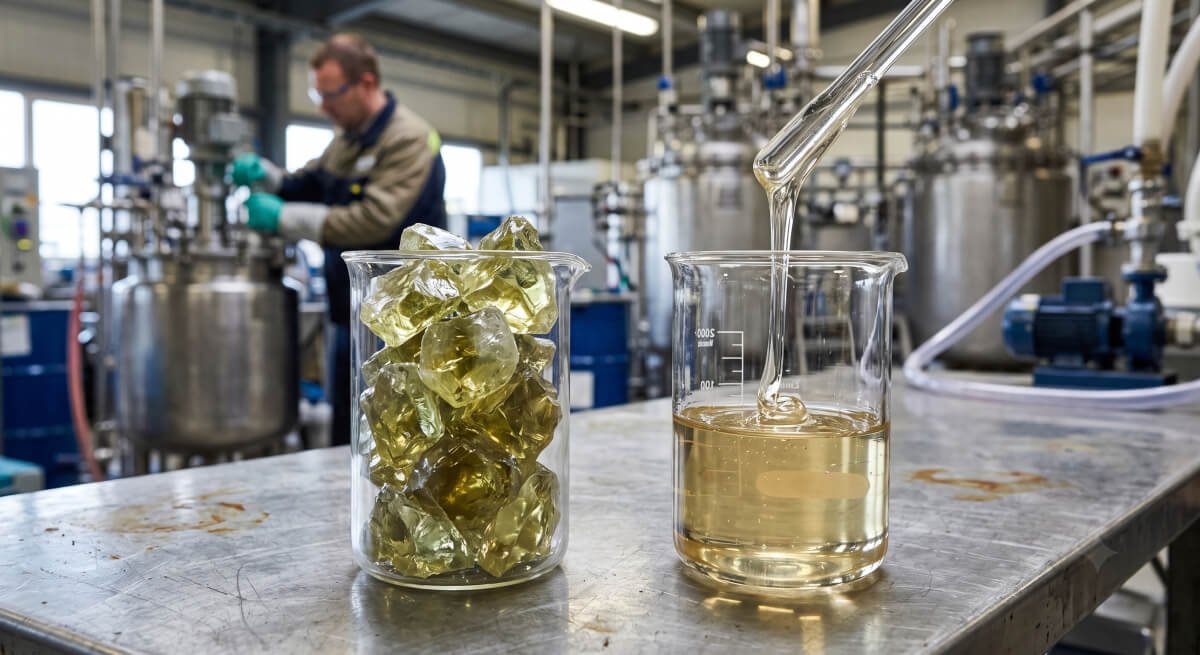
Sodium silicate liquid is a clear to slightly hazy viscous alkaline solution made from silica (SiO₂) and sodium oxide (Na₂O). It is produced by dissolving sodium silicate glass in water under controlled heat and pressure. The resulting solution has a strongly alkaline pH of 11 to 13, a density of 1.4 to 1.6 g/cm³, and a customisable silica-to-alkali ratio (SiO₂/Na₂O) typically ranging from 2.0 to 3.5.
These properties — strong alkalinity, excellent adhesive strength, resistance to heat and moisture, and the ability to react with calcium compounds in cement — make it an ideal additive for a wide range of construction processes.
As a leading sodium silicate liquid manufacturer in India, Sri Varahi Chemicals produces high-purity, industrial sodium silicate liquid in customised ratios and concentrations, ensuring consistent performance for construction-grade applications.
Key Construction Applications of Sodium Silicate Liquid
The construction sector uses sodium silicate liquid in several distinct ways. Each application leverages a different aspect of its chemistry — from its sealing behaviour to its bonding strength and chemical reactivity with cement compounds.
Concrete Densification and Surface Hardening
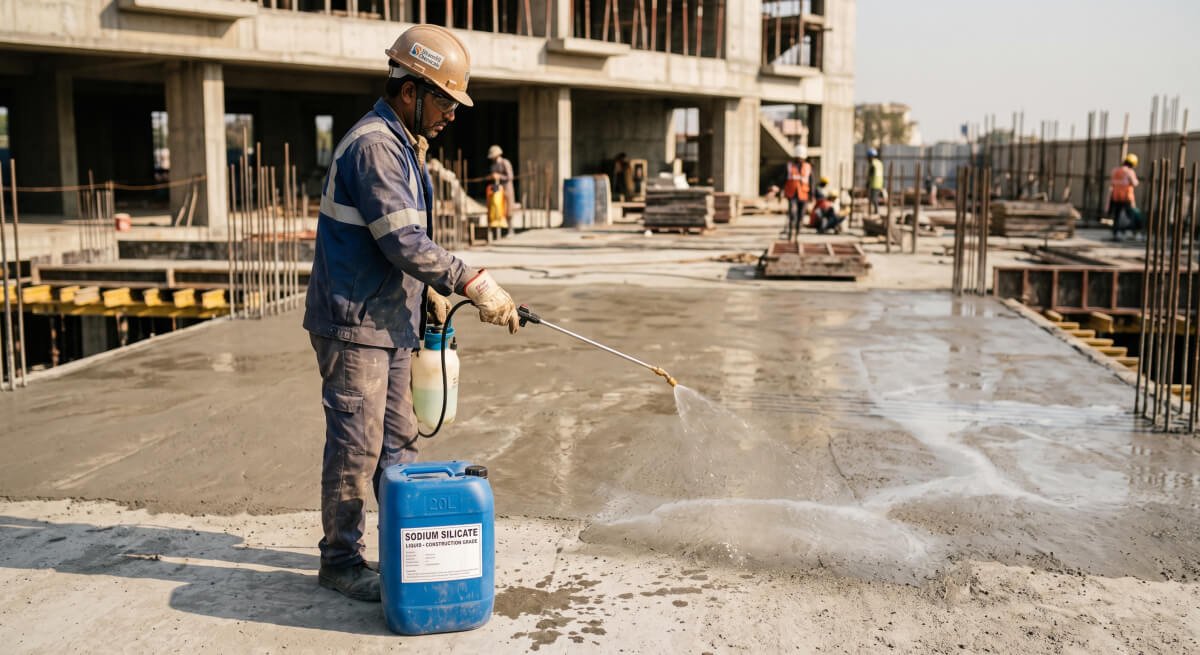
One of the most widely recognised uses of sodium silicate liquid for concrete is as a chemical densifier and surface hardener. When applied to cured concrete surfaces, sodium silicate penetrates the pores and reacts with free calcium hydroxide — a natural byproduct of cement hydration — to form calcium silicate hydrate (C-S-H). This reaction fills the capillary pores within the concrete matrix, making the surface significantly harder, more abrasion-resistant, and less permeable to water and contaminants.
This process is commonly used on warehouse floors, industrial slabs, parking structures, and commercial spaces where the concrete surface is exposed to heavy foot traffic, vehicular loads, or chemical spills. Construction grade sodium silicate liquid with a controlled SiO₂/Na₂O ratio ensures optimal penetration depth and reactivity without leaving a white residue or causing surface scaling.
Waterproofing and Damp Proofing
Sodium silicate liquid waterproofing applications are among the oldest and most proven methods of protecting concrete and masonry structures from moisture ingress. The liquid is applied as a surface treatment to basement walls, retaining walls, water tanks, foundations, and terrace slabs. Once it reacts with the calcium compounds in the concrete or morite, it forms an insoluble crystalline barrier that blocks water from passing through.
Unlike membrane-based waterproofing systems that sit on the surface and can degrade or detach over time, sodium silicate-based treatments become part of the concrete itself. This integral waterproofing approach offers several advantages — it does not peel, blister, or require a protective layer, and it continues to seal micro-cracks as long as moisture and unreacted calcium remain available in the substrate.
For construction chemical manufacturers formulating their own waterproofing compounds, sourcing from an industrial sodium silicate liquid supplier with verified purity and consistent batch quality is critical to product reliability.
Cement and Mortar Modification
Sodium silicate liquid for the cement industry serves as a powerful setting accelerator and performance modifier. When added to cement slurries, mortars, or grouts in controlled proportions, it speeds up the setting time significantly — a property that is especially valuable in repair work, shotcrete applications, tunnel lining, and any scenario where rapid strength gain is needed.
Beyond accelerating set times, sodium silicate also improves the early-age compressive strength of the mix and reduces permeability. In grouting applications, it is used to fill voids and cracks in concrete structures, rock formations, and soil, forming a rigid, water-resistant gel that stabilises the surrounding material.
The ratio and concentration of the sodium silicate liquid must be carefully matched to the cement type and application conditions. An excessively high dosage can cause flash setting or reduce the ultimate strength of the concrete, which is why working with a knowledgeable sodium silicate liquid bulk supplier that provides technical guidance on dosage and compatibility is important.
Soil Stabilisation and Ground Improvement
In geotechnical construction, sodium silicate liquid is used in combination with hardening agents — typically calcium chloride or dilute acids — to stabilise weak or waterlogged soils. The two-component system is injected into the ground, where the sodium silicate reacts with the hardener to form a solid silica gel that binds the soil particles together, increasing the load-bearing capacity and reducing permeability.
This technique is widely used in foundation treatment for buildings on soft ground, tunnel construction in water-bearing soils, embankment stabilisation, and excavation support. It offers a cost-effective alternative to mechanical stabilisation methods, particularly in urban areas where vibration and noise from piling need to be minimised.
Fireproofing and Protective Coatings
Sodium silicate liquid is inherently fire-resistant. When exposed to high temperatures, it intumesces — meaning it swells and forms an insulating foam-like layer that shields the underlying material from heat and flame. This property makes it a key ingredient in fire-retardant coatings, fireproof paints, and passive fire protection systems applied to structural steel, timber, and concrete elements.
Construction chemical formulators also use sodium silicate as a binder in fire-resistant boards, panels, and insulation materials. Its non-toxic, non-flammable composition aligns well with modern green building standards and fire safety regulations.
How Sodium Silicate Liquid Relates to Other Construction Chemicals
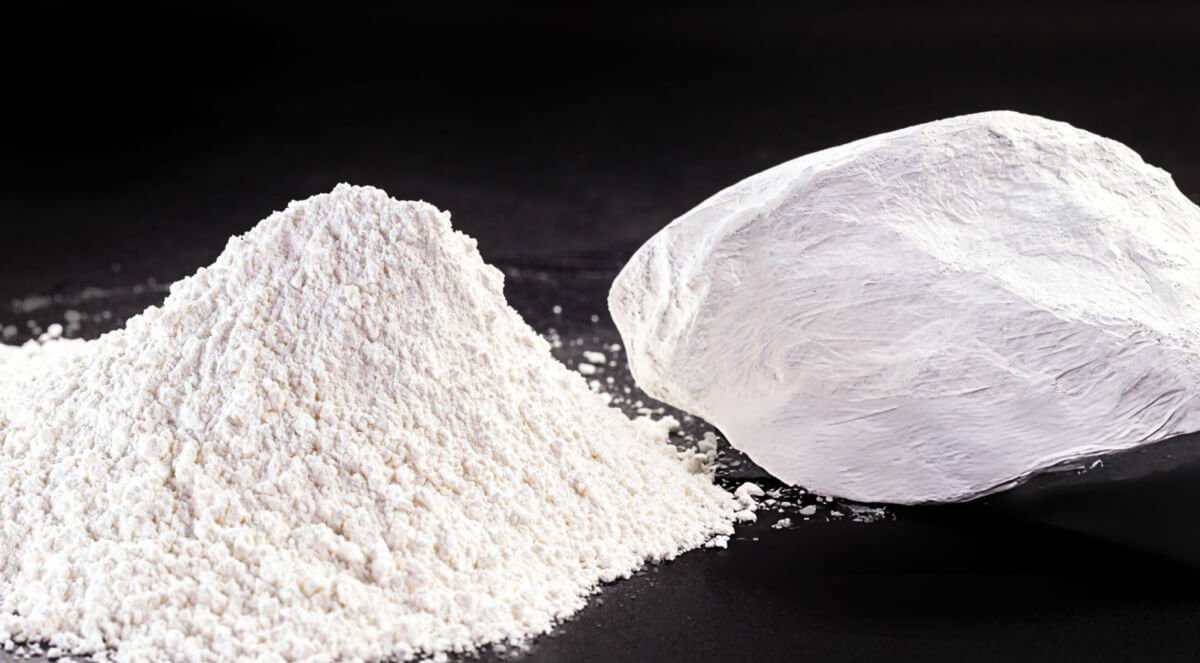
Sodium silicate liquid is often used alongside other silicate-based products in construction. For instance, sodium silicate glass — the solid precursor from which the liquid is produced — is sourced by construction chemical manufacturers who prefer to dissolve and formulate their own liquid solutions in-house to precise concentrations. This approach gives them greater control over the final product’s density, viscosity, and ratio.
Similarly, manufacturers producing speciality construction chemicals such as refractory binders, acid-resistant mortars, and high-temperature adhesives often rely on sodium silicate liquid as a base material, combining it with fillers, aggregite, and other additives to create application-specific formulations.
For those interested in how sodium silicate liquid performs in other heavy industrial settings, it is worth exploring its role in foundry and metal casting applications, where many of the same bonding and heat-resistance properties are put to use in sand mould binders and core-making processes.
What to Look for When Sourcing Construction Grade Sodium Silicate Liquid
Not every sodium silicate liquid on the market is suited for construction applications. The right grade depends on the specific use case, and several quality parameters must be verified before procurement.
The SiO₂/Na₂O ratio should be matched to the application — lower ratios (around 2.0) provide faster reactivity and are suited for accelerating and grouting applications, while higher ratios (around 3.0 to 3.3) offer better film-forming properties for waterproofing and coating uses. Purity levels should be high enough to avoid introducing unwanted salts or residues into the concrete. Consistency across batches is equally important, as variations in density or concentration can lead to unpredictable performance on site.
Manufacturers who want to buy sodium silicate liquid in India for construction projects should prioritise suppliers that offer laboratory-certified specifications, customised formulation support, and flexible bulk packaging — from 250-litre HDPE drums and 1000-litre IBC tanks to full tanker loads.
Why Sri Varahi Chemicals Is the Right Partner for Construction Applications
Sri Varahi Chemicals has served as a trusted sodium silicate liquid manufacturer and industrial sodium silicate liquid supplier for over 25 years. The company operates with ISO-certified quality assurance, supplies to more than 40 countries, and maintains a robust distribution network across India’s major construction and industrial hubs.
Every batch of construction grade sodium silicate liquid is tested for SiO₂ and Na₂O content, density, pH, and viscosity before dispatch. The company offers customised ratios, bulk packaging options, competitive pricing, and dedicated technical support to help construction chemical manufacturers and contractors select the right product for their specific requirements.
Contact Sri Varahi Chemicals today for bulk quotations, technical datasheets, or a consultation on the ideal sodium silicate liquid grade for your construction application.