Clean water is fundamental to public health, industrial operations, and environmental compliance. Behind every functioning water treatment plant and effluent processing facility, a handful of essential chemicals do the heavy lifting — and soda ash dense is one of the most important among them. Used extensively as a pH adjuster, water softener, and alkalinity builder, soda ash dense for water treatment offers a cost-effective and reliable solution for municipal utilities, industrial plants, and effluent treatment operations across India and globally.
For water treatment chemical manufacturers and plant operators looking to buy soda ash dense in India, understanding exactly how this chemical works in treatment processes — and why sourcing quality matters — can directly impact operational efficiency, regulatory compliance, and treatment costs.
What Is Soda Ash Dense?
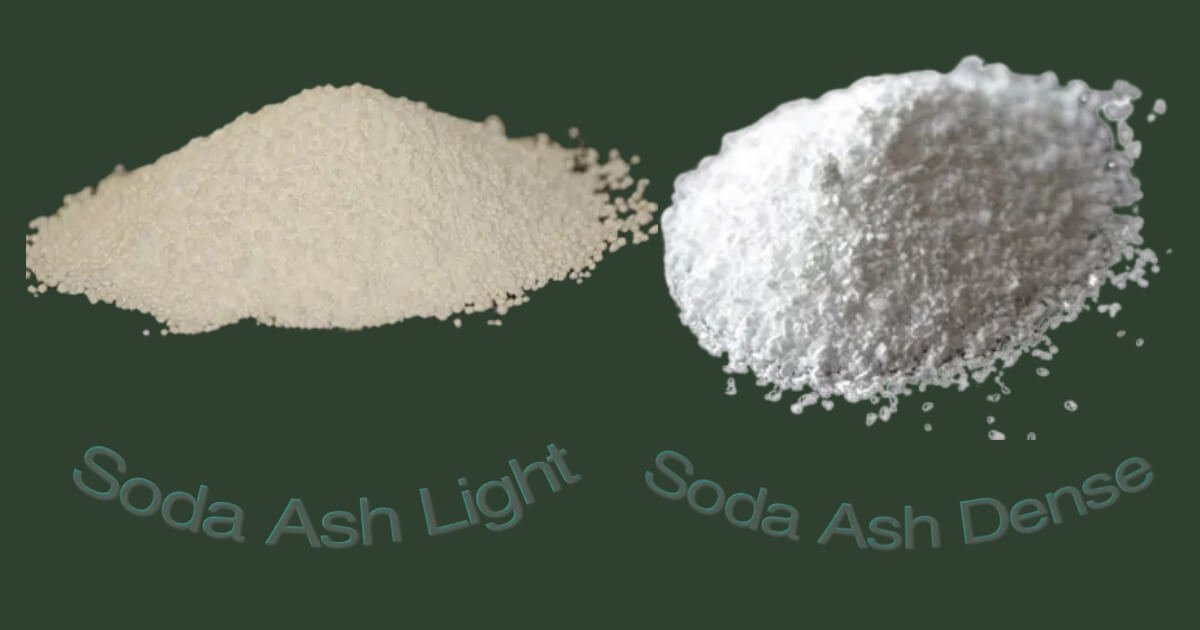
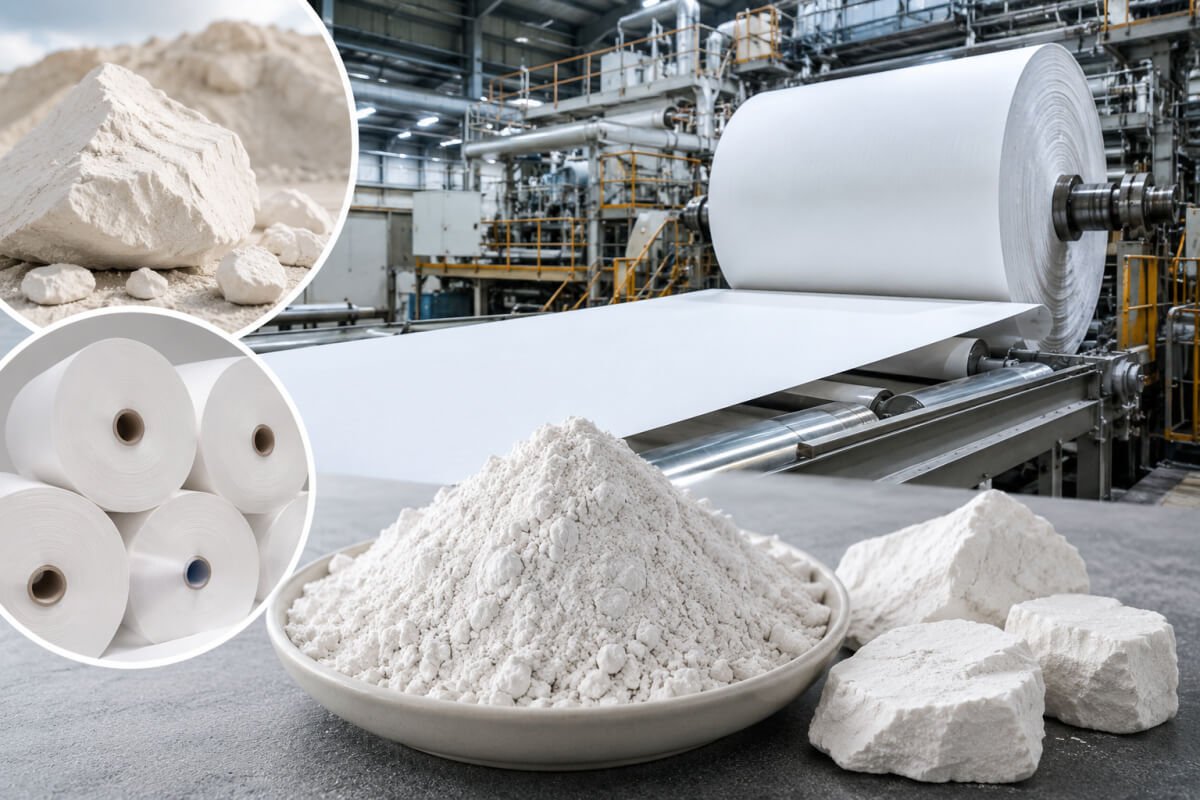
Soda ash dense is the industrial name for sodium carbonate (Na₂CO₃) in its high-density granular form. It is a white, free-flowing alkaline powder with a purity of approximately 99%, a bulk density of 0.90 to 1.00 g/cm³, and a strongly alkaline pH of 11.5 to 12.0 in a 1% aqueous solution. It dissolves readily in water, releasing sodium and carbonate ions that participate in a range of chemical reactions.
Compared to its lighter counterpart — soda ash light — soda ash dense has a higher bulk density and coarser granule size, which gives it distinct handling advantages in large-scale dosing systems. It generates less dust during storage and transfer, flows more predictably through hoppers and feeders, and dissolves at a controlled rate that is well suited to continuous treatment processes.
As a certified soda ash dense manufacturer in India, Sri Varahi Chemicals supplies high-purity, industrial-grade soda ash dense specifically suited for water treatment, effluent processing, and chemical manufacturing applications.
How Soda Ash Dense Works in Water Treatment
Water treatment — whether for municipal drinking water, industrial process water, or boiler feed water — involves several chemical steps where soda ash dense plays a direct and measurable role.
pH Adjustment and Alkalinity Control
The most fundamental application of soda ash dense in water treatment is pH correction. Raw water from rivers, bore wells, and reservoirs often arrives at treatment plants with a pH that is too low — meaning it is acidic. Acidic water is corrosive to metal piping, concrete structures, and distribution infrastructure. It can also leach harmful metals like lead and copper from plumbing systems into the treated water supply.
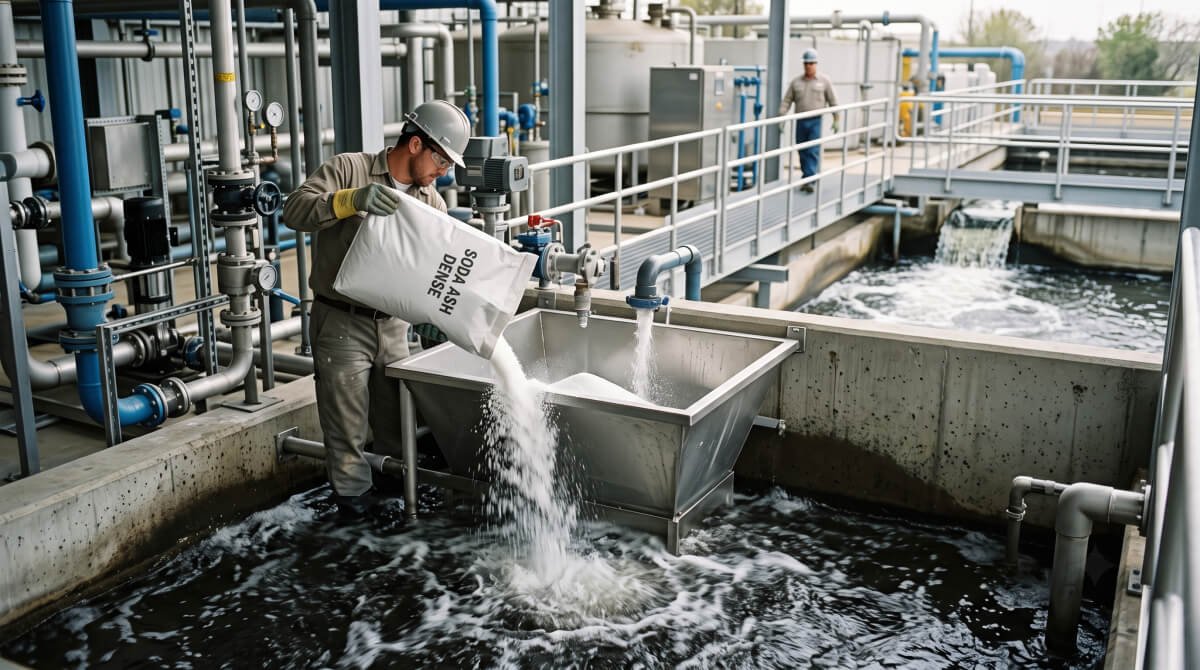
Soda ash dense neutralises this acidity efficiently. When dissolved in water, it releases carbonate ions (CO₃²⁻) that react with hydrogen ions (H⁺) to raise the pH into the neutral or slightly alkaline range. Unlike caustic soda (sodium hydroxide), which raises pH sharply and requires very precise dosing to avoid overshooting, soda ash dense has a buffering effect — it raises pH gradually and helps stabilise it within a target range. This makes it easier to control in large-volume treatment systems and reduces the risk of sudden pH swings.
For municipal water utilities, maintaining the right pH is not just a performance issue — it is a regulatory requirement. Soda ash dense water treatment chemical dosing ensures compliance with drinking water standards while also protecting the treatment plant’s own equipment from corrosion.
Water Softening
Hard water contains elevated levels of dissolved calcium (Ca²⁺) and magnesium (Mg²⁺) ions. These ions cause scaling in boilers, heat exchangers, cooling towers, and industrial piping, reducing equipment efficiency and increasing maintenance costs. In the lime-soda softening process — one of the most widely used methods in industrial water treatment — soda ash dense is added alongside hydrated lime to precipitate calcium and magnesium as insoluble carbonates and hydroxides.
The carbonate ions from soda ash react with dissolved calcium to form calcium carbonate (CaCO₃), which is insoluble and settles out as a solid. This reaction removes non-carbonate (permanent) hardness from the water, which lime alone cannot address. The resulting treated water is significantly softer, reducing scale formation and extending the operational life of downstream equipment.
Industrial facilities that operate high-pressure boilers, power plants, and process cooling systems rely on this treatment method extensively. Sourcing from a dependable soda ash dense bulk supplier ensures uninterrupted chemical availability for these continuous operations.
Coagulation and Flocculation Support
In surface water treatment, coagulants such as aluminium sulphate (alum) or ferric chloride are added to remove suspended solids, turbidity, and colloidal matter. These coagulants work best within a specific pH range — typically between 6.0 and 7.5 — and their addition often lowers the water’s pH and consumes its natural alkalinity.
Soda ash dense is used to replenish this lost alkalinity and maintain the pH within the coagulant’s optimal operating window. Without adequate alkalinity, coagulation is incomplete, floc formation is poor, and downstream filtration systems become overloaded. By stabilising the chemistry upstream, soda ash dense improves the efficiency of the entire clarification process.
How Soda Ash Dense Works in Effluent Treatment
Industrial effluent — wastewater generated by manufacturing plants, textile units, chemical factories, and food processing facilities — presents a different set of challenges. It is often highly acidic, loaded with dissolved metals, and contains complex organic and inorganic pollutants. Soda ash dense for effluent treatment addresses several of these challenges directly.
Acid Neutralisation
Many industrial processes generate acidic wastewater that must be neutralised before it can be discharged or sent for biological treatment. Effluent from metal finishing, battery manufacturing, fertiliser production, and chemical synthesis frequently has a pH below 4. Soda ash dense is dosed into the effluent stream to raise the pH to the required discharge standard — typically between 6.5 and 9.0 — in a controlled and predictable manner.
Its buffering capacity is particularly valuable here. Unlike stronger alkalis that can overshoot and create new compliance issues, soda ash dense provides a more gradual pH adjustment that is easier to automate and monitor.
Heavy Metal Precipitation
When acidic effluent is neutralised with soda ash dense, dissolved heavy metals such as zinc, copper, nickel, chromium, and lead precipitate out of solution as insoluble metal carbonates or hydroxides. This precipitation step is critical for meeting environmental discharge norms and for protecting downstream biological treatment stages, where high metal concentrations would inhibit microbial activity.
The effectiveness of metal precipitation depends on the pH level achieved and the purity of the alkali used. An industrial soda ash dense supplier providing material with low impurities and consistent chemical composition ensures reliable and repeatable metal removal performance.
Textile and Dyeing Effluent
Textile dyeing and finishing operations generate large volumes of highly alkaline or acidic wastewater containing residual dyes, salts, and processing chemicals. Soda ash dense is used in the effluent treatment plant to adjust pH before colour removal and biological treatment stages. It is also used within the dyeing process itself as a fixation agent — a dual role that makes it one of the most consumed chemicals in the textile industry.
For more context on how soda ash products function across the textile value chain, you may find it useful to read about how soda ash light is used in the textile dyeing industry, where the lighter grade serves a complementary role in dye fixation and fabric processing.
Why Soda Ash Dense Is Preferred Over Other Alkalis in Water Treatment
Plant operators and treatment chemical formulators often have several alkaline agents to choose from — including caustic soda (NaOH), hydrated lime (Ca(OH)₂), and sodium bicarbonate (NaHCO₃). Soda ash dense occupies a practical middle ground among these options.
It is safer to handle and store than caustic soda, which is highly corrosive. It does not generate the sludge volumes that lime produces, reducing disposal costs. It provides stronger pH adjustment than sodium bicarbonate, requiring lower dosage rates for the same effect. And its high bulk density means it takes up less storage space per tonne compared to lighter alternatives — a meaningful advantage for plants managing large chemical inventories.
These factors make soda ash dense a preferred soda ash dense water treatment chemical across a wide range of applications, from small-scale effluent plants to large municipal water utilities.
Sourcing the Right Grade for Water Treatment
When looking to buy soda ash dense in India for water treatment or effluent processing, buyers should verify several quality parameters. Purity should be 98.5% or above to avoid introducing unwanted contaminants into the treatment process. Moisture content should be below 0.5% for consistent dosing accuracy. Insoluble matter should be minimal — ideally below 0.05% — to prevent clogging in chemical feed systems. And batch-to-batch consistency is essential, as variations in density or alkalinity can disrupt automated dosing controls.
A certified soda ash dense chemical manufacturer with ISO-quality processes and laboratory testing at every production stage provides this consistency.
Why Sri Varahi Chemicals Is the Right Partner
Sri Varahi Chemicals has served as a trusted soda ash dense supplier India and international markets depend on for over 25 years. The company supplies high-purity soda ash dense in bulk to water treatment plants, effluent treatment facilities, chemical manufacturers, and industrial processors across Gujarat, Maharashtra, Tamil Nadu, Telangana, Andhra Pradesh, Karnataka, Rajasthan, and export markets spanning 40+ countries.
Every batch is tested for purity, pH, density, and moisture. Packaging options include 25 kg and 50 kg HDPE bags, 1 MT jumbo bags, and customised bulk shipments. The team also provides technical support to help plant operators determine the right dosage, grade, and supply schedule for their specific treatment requirements.
Contact Sri Varahi Chemicals today for bulk quotations, technical datasheets, or guidance on selecting the ideal soda ash dense grade for your water treatment or effluent processing operations.