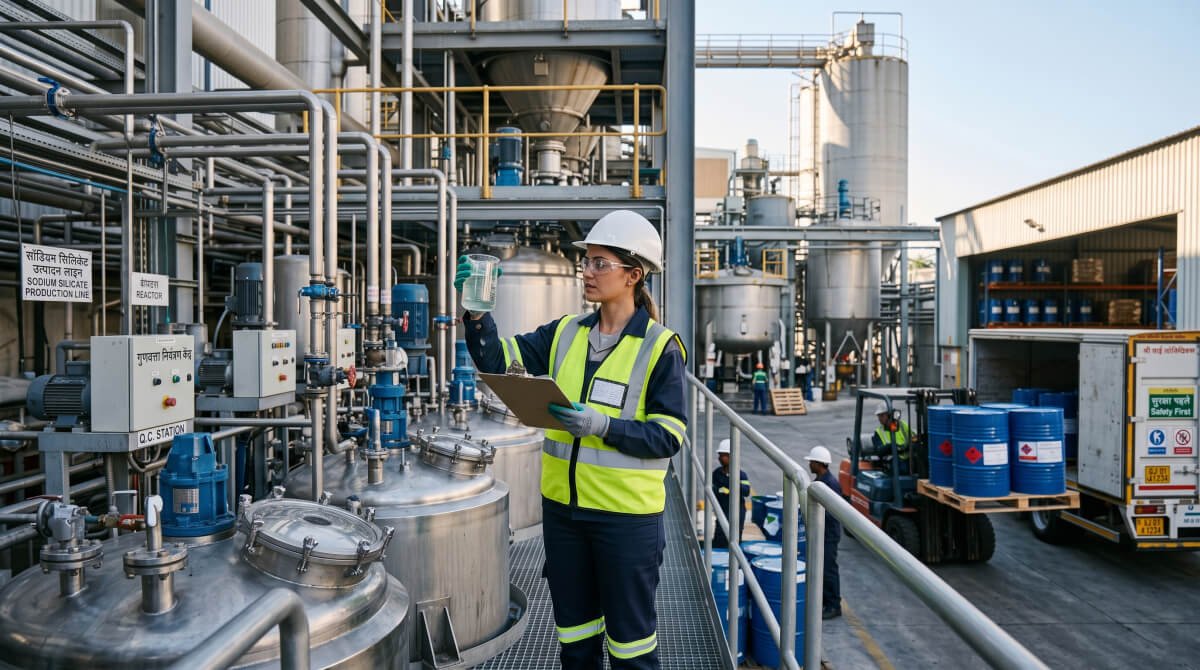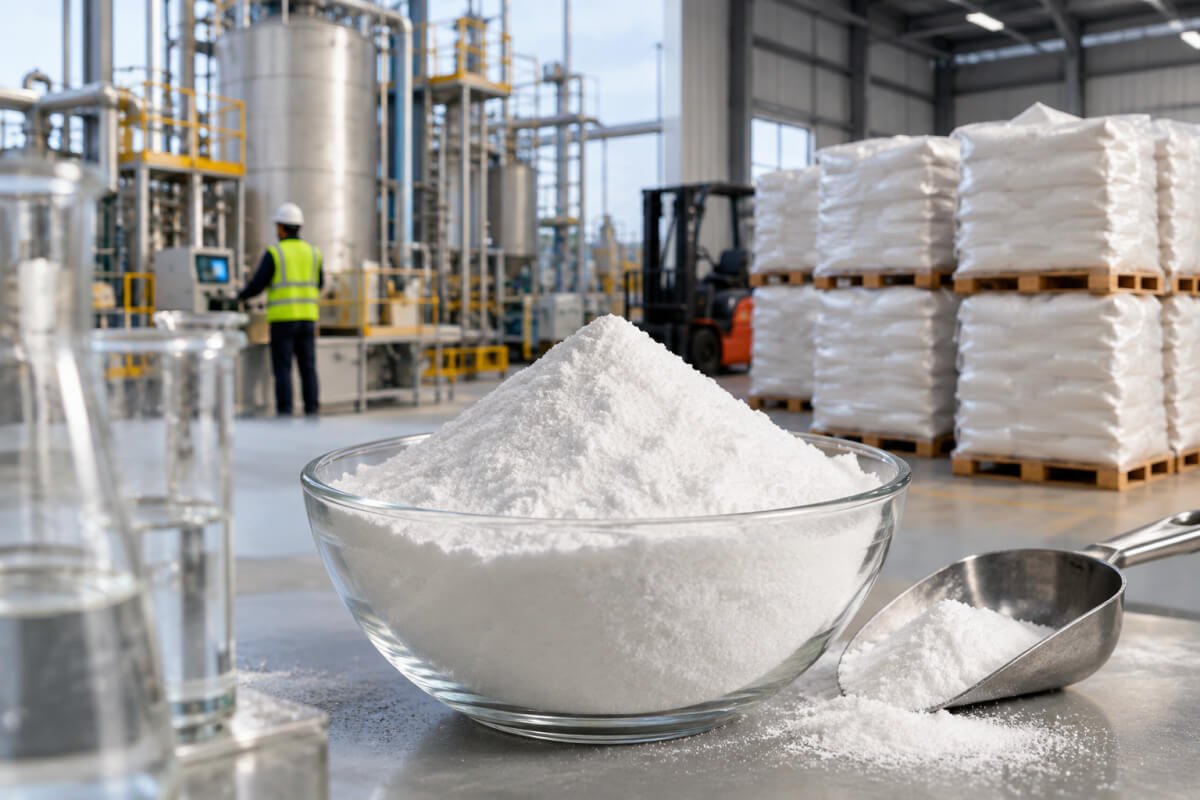

Buying sodium silicate in bulk is not a simple commodity transaction. The chemical’s performance in your end product — whether that is a detergent, a construction waterproofing agent, a foundry binder, or a ceramic glaze — depends entirely on its purity, ratio, form, and consistency. Yet many industrial buyers place large orders based on price alone, only to discover quality issues, supply disruptions, or specification mismatches that cost far more than the savings they were chasing.
The difference between a smooth procurement experience and a costly one often comes down to the questions you ask before signing the purchase order. For procurement managers, plant operators, and chemical distributors evaluating sodium silicate suppliers in India, this guide outlines the most important questions to raise with any potential supplier — and what the right answers should sound like.
“What SiO₂/Na₂O Ratios Do You Manufacture?”
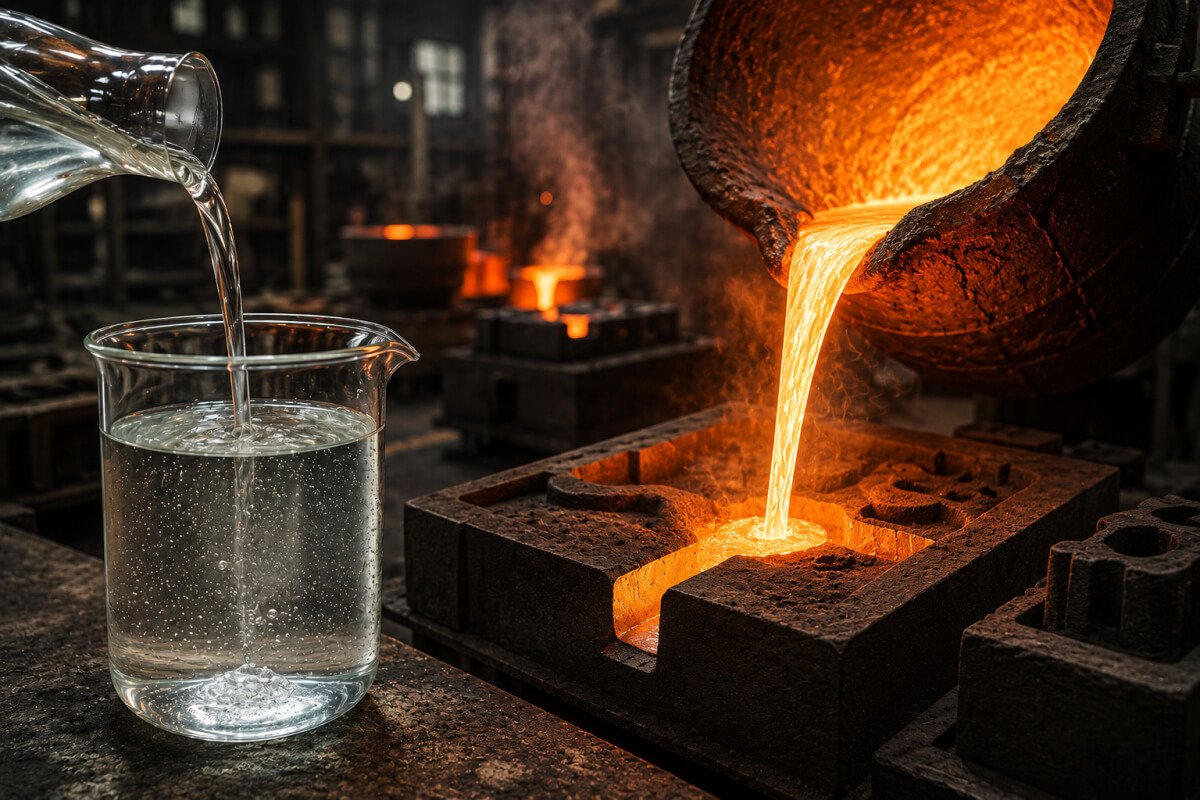
This is the single most important technical question to ask any sodium silicate manufacturer in India. The silica-to-alkali ratio — also called the silicate modulus — determines how the product behaves in your application. A ratio of around 2.0 produces a highly alkaline solution suited for detergent and cleaning formulations. A ratio of 3.0 to 3.5 delivers a more silica-rich product with stronger binding, adhesive, and film-forming properties — ideal for construction, foundry, and coating applications.
A supplier who offers only one or two fixed ratios may not be a manufacturer at all — they may be a trader reselling material from a third party. A genuine sodium silicate manufacturer will have the production flexibility to customise ratios to your exact specification and will be able to explain how different ratios affect performance in your specific application.
Ask for the standard ratio range they produce, whether custom ratios are available, and what the minimum order quantity is for a non-standard specification. The answer will tell you immediately whether you are dealing with a manufacturer or a middleman.
“Do You Supply Both Liquid and Glass Forms?”
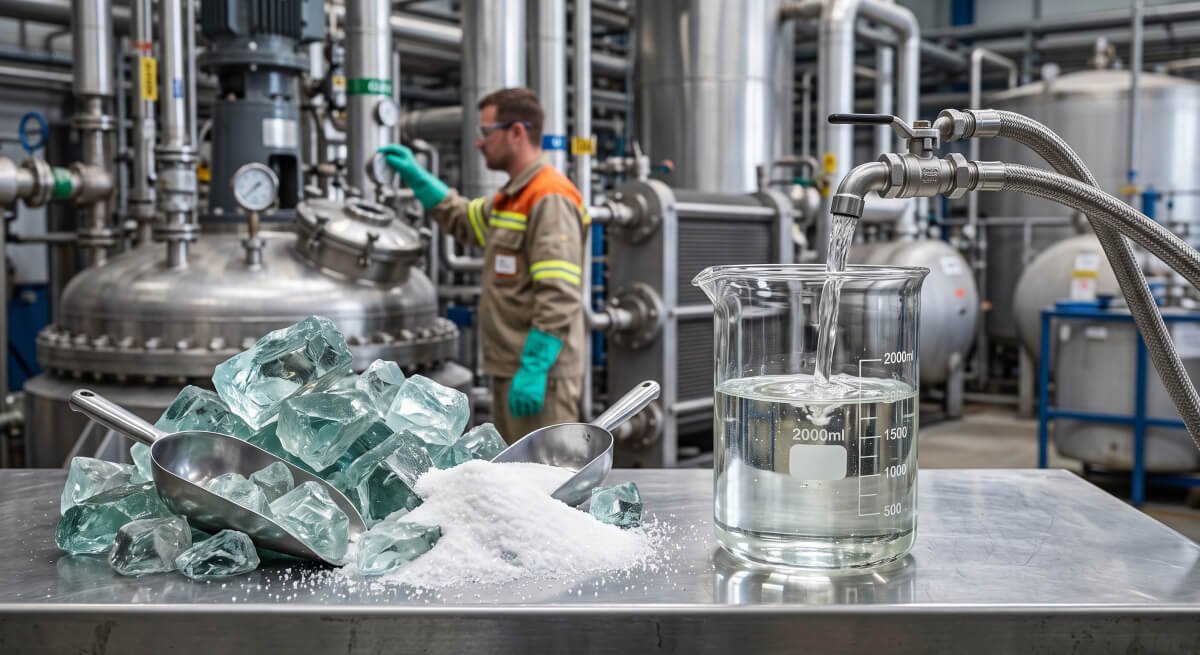
Sodium silicate is commercially available in two primary forms — liquid and solid glass. Each serves different industrial needs, and a capable supplier should offer both.
Sodium silicate liquid is a viscous alkaline solution that is ready for direct use in manufacturing processes such as detergent production, paper bonding, construction chemical formulation, and water treatment. It is the preferred form for buyers who need a ready-to-use product without the need for dissolution equipment.
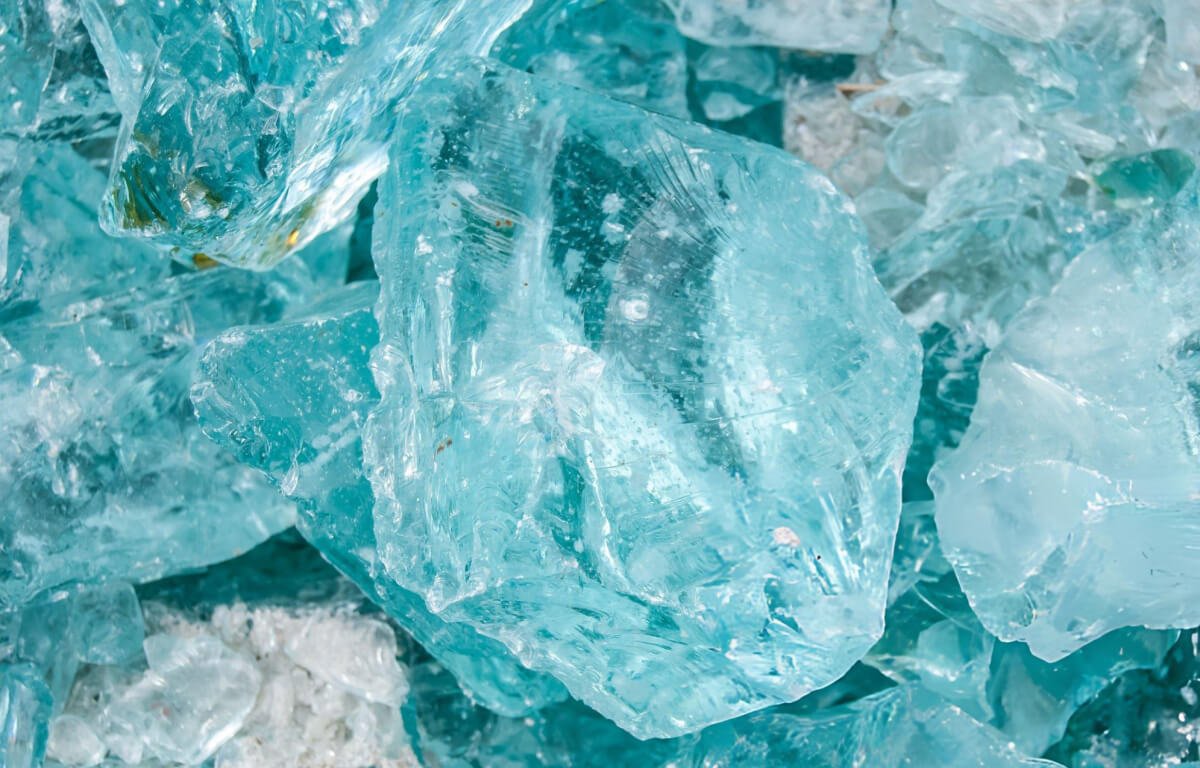
Sodium silicate glass — supplied as lumps or crushed cullets — is the solid precursor from which the liquid is produced. Buyers with in-house dissolution facilities often prefer purchasing glass because it is more economical to transport, has a longer shelf life, and gives them greater control over the final solution’s concentration and density.
A sodium silicate bulk supplier that manufactures both forms gives you flexibility to choose the right product for each application and consolidate your procurement with a single partner. For a detailed comparison of these two forms and guidance on which suits different industries, it is worth reading about sodium silicate glass vs liquid and which one is right for your industry.
“Can You Provide a Certificate of Analysis for Every Batch?”
Quality documentation is non-negotiable when buying sodium silicate in bulk. Every shipment should arrive with a Certificate of Analysis (CoA) that details the SiO₂/Na₂O ratio, total solids content, pH, density, viscosity (for liquid), iron oxide content, and insoluble matter levels.
If a supplier hesitates to provide a CoA, or provides only a generic specification sheet that does not reference the specific batch being shipped, treat it as a serious red flag. Batch-level documentation is the only way to verify that what arrives at your facility matches what was ordered — and it is essential for traceability if quality issues arise downstream.
An industrial sodium silicate supplier with ISO-certified quality management processes will conduct laboratory testing at every stage of production and maintain records that link each shipment to specific test results. Ask to see a sample CoA before placing your first order to assess the level of detail and professionalism.
“What Are Your Production Capacity and Lead Times?”
Supply continuity matters as much as product quality. A missed or delayed shipment can shut down production lines, delay customer orders, and create cascading losses across your supply chain.
Ask about the manufacturer’s installed production capacity — both for liquid and glass. Confirm their standard lead times from order confirmation to dispatch. Understand whether they maintain buffer stock or operate on a make-to-order basis. And ask specifically about their ability to handle demand spikes — seasonal peaks, urgent requirements, or sudden volume increases.
A sodium silicate wholesale supplier with adequate capacity will be transparent about these numbers. If they are vague or evasive, their capacity may not be sufficient to serve your needs reliably over time.
“What Packaging and Logistics Options Do You Offer?”
Packaging and logistics may seem like secondary concerns, but they have a direct impact on product quality, handling efficiency, and total cost of ownership.
For sodium silicate liquid, ask about packaging options — 50-litre HDPE drums, 250-litre drums, 1000-litre IBC tanks, or bulk tanker loads. Confirm that all containers are leak-proof and properly sealed to prevent spillage and crystallisation during transit. For sodium silicate glass, verify that bags or containers provide adequate moisture protection to prevent degradation.
A capable sodium silicate liquid supplier will offer multiple packaging formats to suit different storage, handling, and production requirements. Ask also about their distribution reach — whether they can deliver reliably to your facility’s location and how quickly a repeat order can be fulfilled.
For international buyers, this question extends to export capability. Sodium silicate exporters India depends on must be experienced with export-grade packaging, containerised shipping, international documentation, and customs compliance. A manufacturer with an established export track record across multiple continents is far more likely to deliver a smooth cross-border procurement experience.
“What Is Your Pricing Structure for Bulk Orders?”
Price is important, but it should be one of the last questions, not the first. By this point, you should already have a clear picture of the supplier’s quality, capacity, and service capabilities — the factors that determine whether their price represents genuine value or a false economy.
Ask whether they offer volume-based pricing tiers and what the thresholds are. Understand whether pricing includes delivery or is ex-works. Clarify payment terms and whether they offer credit to established buyers. And ask about price stability — whether they hold pricing for a defined period or adjust it with every order.
The cheapest per-kilogram price from an inconsistent supplier almost always costs more in the long run than a slightly higher price from a sodium silicate glass supplier India trusts for reliable, certified quality. Formulation rework, production stoppages, batch rejections, and customer complaints are hidden costs that erode any upfront savings rapidly.
“Do You Provide Technical Support?”
Sodium silicate is not a plug-and-play chemical. Its performance depends on the correct ratio, concentration, dosage, and compatibility with other ingredients in your formulation. A supplier who can offer technical guidance — on ratio selection, dosage optimisation, storage best practices, and troubleshooting — adds value that goes well beyond the product itself.
Ask whether they have a dedicated technical team. Find out if they can recommend the optimal grade and ratio for your specific application. And determine whether they provide support after the sale — not just during the quoting stage.
A sodium silicate liquid manufacturer that invests in technical capability is typically a manufacturer that understands downstream applications deeply, which also means their product quality is more likely to meet your requirements consistently.
“How Long Have You Been in This Business, and Who Are Your Clients?”
Experience and reputation are the hardest things to fake. A manufacturer with decades of operational history, a broad client base across multiple industries, and verified export credentials offers a level of reliability that newer or narrowly focused suppliers cannot match.
Ask for references from buyers in your industry. Check whether they serve the same sectors you operate in — detergent, construction, foundry, ceramic, water treatment, or chemical processing. And ask about their export footprint — how many countries they ship to and which regions they cover.
Why Sri Varahi Chemicals Answers Every Question Right
Sri Varahi Chemicals has been a trusted sodium silicate manufacturer in India for over 25 years. The company manufactures both sodium silicate liquid and sodium silicate glass in customisable SiO₂/Na₂O ratios with ISO-certified quality assurance and laboratory-tested batch consistency.
With a production infrastructure that supports high-volume output, packaging options spanning HDPE drums, IBC tanks, tanker loads, jumbo bags, and containerised export shipments, and a distribution network covering Gujarat, Maharashtra, Tamil Nadu, Telangana, Andhra Pradesh, Karnataka, and Rajasthan, Sri Varahi Chemicals delivers the quality, reliability, and technical expertise that serious industrial buyers demand.
The company serves over 500 clients across the detergent, foundry, construction, ceramic, textile, water treatment, and chemical processing industries, and exports to more than 40 countries across the Middle East, Africa, South-East Asia, and South Asia.
Contact Sri Varahi Chemicals today for bulk quotations, sample CoAs, or a technical consultation on selecting the right sodium silicate product for your application.